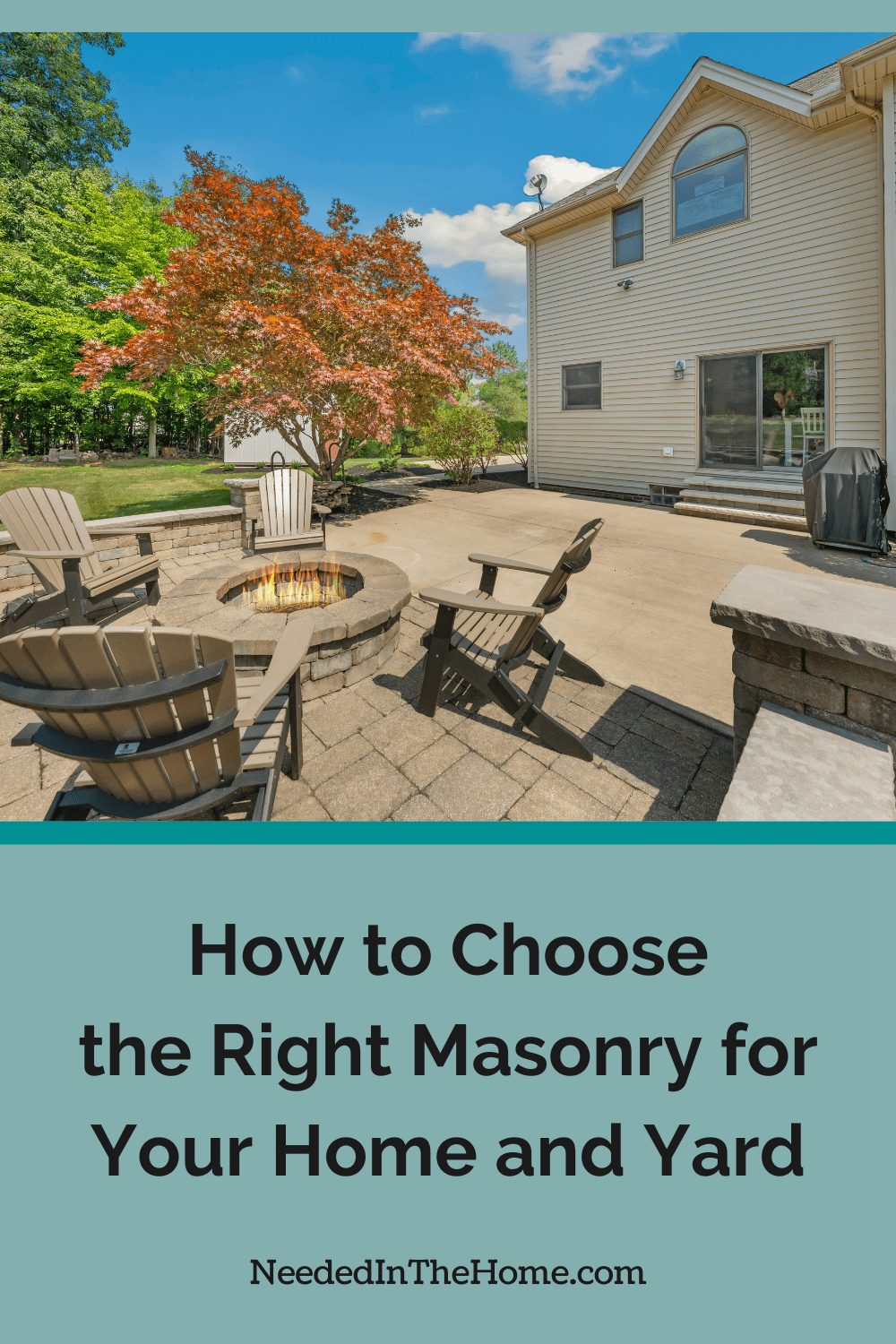
Masonry can do a lot for a property. A well-placed stone patio creates an outdoor living space you’ll actually use. A retaining wall can solve a drainage or slope problem that’s been bothering you for years. Walkways connect parts of the yard that feel disconnected. Steps make grade changes feel intentional rather than awkward. But getting all of that right starts with choosing the right materials and the right application for your specific property, and that choice is less obvious than it might seem at first.
Some links in this post are affiliate links, which means I receive a commission if you make a purchase.
Walk through any neighborhood and you’ll notice that the outdoor spaces that look best aren’t necessarily the most elaborate ones. They’re the ones where the stonework feels like it belongs, where the materials match the house, and where the features solve real problems rather than just filling space. That’s the standard worth aiming for, and below are the key things to think through before you start.
Start With What the Space Actually Needs
Before you pick a material or a style, it helps to be honest about what problem you’re trying to solve. Masonry projects generally fall into two camps: structural and aesthetic. Sometimes they’re both at once, but knowing which one is driving the project changes how you approach it.
Structural masonry, like retaining walls, steps, and drainage solutions, needs to perform reliably over time. It has to handle weight, water, and seasonal movement. The material choice matters for durability, not just appearance. Aesthetic masonry, like decorative garden walls, stone edging, and entry features, has more flexibility in material selection but still needs to hold up to weather and use.
Starting with the functional need first helps you avoid the common mistake of choosing something that looks great in photos but doesn’t hold up in practice.
Match the Material to Your House and Landscape
One of the most important decisions in any masonry project is making sure the material you choose actually fits the property. Whichever professional masonry services you decide to hire for your home or yard, the conversation should start with the property itself, not a catalogue of materials. Stone that looks beautiful in isolation can feel completely out of place against a modern home. Brick that suits a traditional New England exterior might look awkward next to a contemporary landscape design.
The architectural style of the house, the colours of the exterior, and the character of the existing landscape all need to influence the material selection. Natural stone, concrete pavers, brick, and bluestone all have different visual weights and personalities. A good masonry contractor will walk the property with you and think about these relationships before suggesting a specific material, not after. For example, Growing Solutions Landscaping & Design considers scale, proportion, surrounding features, and the relationship between stonework and the house when planning masonry projects. That kind of property-specific thinking can help prevent a new feature from feeling disconnected from the rest of the yard.
Consider How the Feature Will Be Used Day to Day
A patio that looks beautiful in photos but gets slippery when wet is a problem. A walkway that’s too narrow for two people to walk side by side creates friction every time you use it. Steps that aren’t proportioned correctly feel off every single time you climb them. These are the kinds of issues that don’t show up in design renderings but affect daily life once the project is complete.
When you’re choosing masonry for your yard, think through how it will actually be used. Who will use it, how often, and in what conditions? A pool surround needs a different surface texture than a front entry pathway. A fire pit area needs clearance and seating space built into the design.
Getting these practical details right during the planning phase is what makes the finished project feel genuinely useful rather than just visually appealing.
Think About Long-Term Performance, Not Just Initial Cost
Different masonry materials have very different maintenance and longevity profiles. Natural stone tends to be highly durable and ages gracefully, but it requires careful installation and proper base work to perform well over time. Concrete pavers are versatile and relatively cost-effective, but they can shift or stain in certain conditions. Brick is classic and long-lasting but needs proper drainage to prevent freeze-thaw damage in colder climates.
The upfront cost of a masonry project is only part of the picture. A cheaper material that requires frequent repair or replacement over ten years isn’t necessarily the more economical choice.
Get the Base Work Right
This is the part of masonry that’s invisible once the project is finished but determines almost everything about how it performs. Proper base preparation, including grading, compaction, drainage, and depth of the base material, is what prevents settling, cracking, and shifting over time.
Freeze-thaw cycles in colder climates put particular stress on masonry. If the base isn’t properly prepared, water gets in, freezes, expands, and gradually breaks down even well-installed stonework. This is one of the most common reasons DIY masonry projects fail and one of the strongest arguments for working with an experienced contractor who understands local soil and climate conditions.
Final Words
Before committing to any masonry project, it’s worth sitting with a few practical questions. Does this feature solve a real problem or just add visual interest? Will it make sense in five years when the surrounding landscape has matured? Does the scale feel right for the size of the yard? And does the material choice feel connected to the rest of the property?
The best masonry projects answer yes to all of these questions before the first stone is laid.
This is a contributed post.
More From NeededInTheHome
Product Reviews
Get Our Books
Etsy Shop
TPT Store
eBay Store
Linktree
My Faith Testimony
Subscribe so you never miss a post.
If you find my tips useful, feel free to buy me a coffee. Thank you in advance!
Want to remember this? Pin it to your favorite Pinterest Board!
Join the newsletter
Subscribe to receive our latest articles and promotional content by email from NeededInTheHome
Leave a Reply