
Everybody will run into faucet issues at some point. From persistent dripping to discolored water, there are many different problems you can encounter. Some of the problems are due to a fault with the tap itself, while others are a sign of a wider plumbing issue. In this post, we’ll explore 5 of the most common faucet faults and explain exactly how you can repair them.
Some links in this post are affiliate links, which means I receive a commission if you make a purchase.
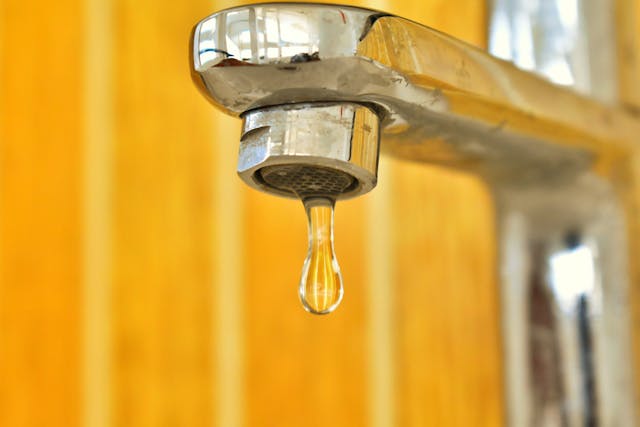
Dripping spout
Got a faucet that keeps dripping? This is a common issue that can lead to lots of water being wasted. What may start as a small and subtle drip could evolve into a steady flow if you ignore it, potentially doubling your water bill. Worn-out washers, O-rings or seals are often the culprit.
How to Fix It:
Fixing a dripping spout could be a simple DIY job. Start by turning off the water supply and then disassemble the faucet handle using a screwdriver. Take note of each part and inspect them for wear, paying particular attention to washers, O-rings and seals. Throw away any worn parts, and buy new ones, making sure to apply plumber’s grease to each new part before reassembly. Once put back together, use again and recheck for leaks.
Leaky base
A faucet leak doesn’t always come from the spout. If water is pooling around the base of the faucet or under the sink, it could be a worn seal near the base or some other loose connection. As with a dripping spout, this is a problem you’ll want to repair to prevent eye-watering water bills.
How to Fix It:
This is a slightly more finicky job. You’ll need to similarly turn the water off and then inspect the connections to identify exactly where the leak is coming from. Tightening connections with a wrench or pliers may fix the problem, but it’s also possible it could be a worn washer or O-ring near the base, which will mean disassembling the tap fully to get at it. Alternatively, it could be a case of disconnecting the water supply line and removing the nut under the sink to lift the faucet and replace the washer or seal near the base.
Low pressure
Water coming out as a dribble? This can be a frustrating problem that can have many causes including a clogged aerator, faulty shutoff valve, pipe leak or malfunctioning PRV.
How to Fix It:
This is potentially a job that you’ll want to hire a plumber for. Check first whether it’s a problem that is affecting other faucets or even neighbors to get a sense of the scale of the issue. If the problem seems isolated to that particular tap, start by checking the aerator. This is found at the tip of the faucet and mineral deposits can often accumulate here. Clean the aerator by soaking it in a vinegar solution, rinse it under water and then reattach it. If this hasn’t solved the issue, inspect plumbing for leaks or corrosion.
Stiff / Squeaky handle
Another common problem is a handle that feels stiff or squeaks when you turn it. This issue is more annoying than anything else, but it can become a serious problem if the handle won’t turn at all. The cause? Usually some kind of wear to handle components or a lack of lubrication.
How to Fix It:
Fixing this issue might require disassembling the faucet and adding some lubricant to the internal parts. Turn off the water supply and then remove the handle by unscrewing it. Inspect the inside of the handle and the stem for corrosion to check whether parts need replacing. A worn washer or O-ring could be to blame, but it may just be a simple case of lubricating parts with some plumber’s grease if none of the components seem damaged.
Discolored water
Water coming out yellowish, reddish or brown? This is likely the result of rust or sediment build-up. Such a problem needs to be fixed straight away as discolored water doesn’t just look weird and taste funny, but could be unhealthy to drink and will prevent you from properly cleaning anything. The rust or sediment could also lead to other issues like leaks and pressure problems.
How to Fix It:
First, run the tap for a few minutes and see if the problem resolves itself. If the discoloration persists, you may need to start examining other components for rust. Flushing out the water system can sometimes resolve the issue – this involves turning on all faucets and draining the tank if you have a water heater. In many cases, this issue will require a plumber to solve. In fact, it’s best to hire a professional plumber for any of these faults if you don’t feel that you can confidently repair it yourself.
This is a contributed post.
More From NeededInTheHome
Product Reviews
Get Our Books
Etsy Shop
TPT Store
eBay Store
Linktree
My Faith Testimony
Subscribe so you never miss a post.
If you find my tips useful, feel free to buy me a coffee. Thank you in advance!
Want to remember this? Pin it to your favorite Pinterest Board!
Join the newsletter
Subscribe to receive our latest articles and promotional content by email from NeededInTheHome
Leave a Reply