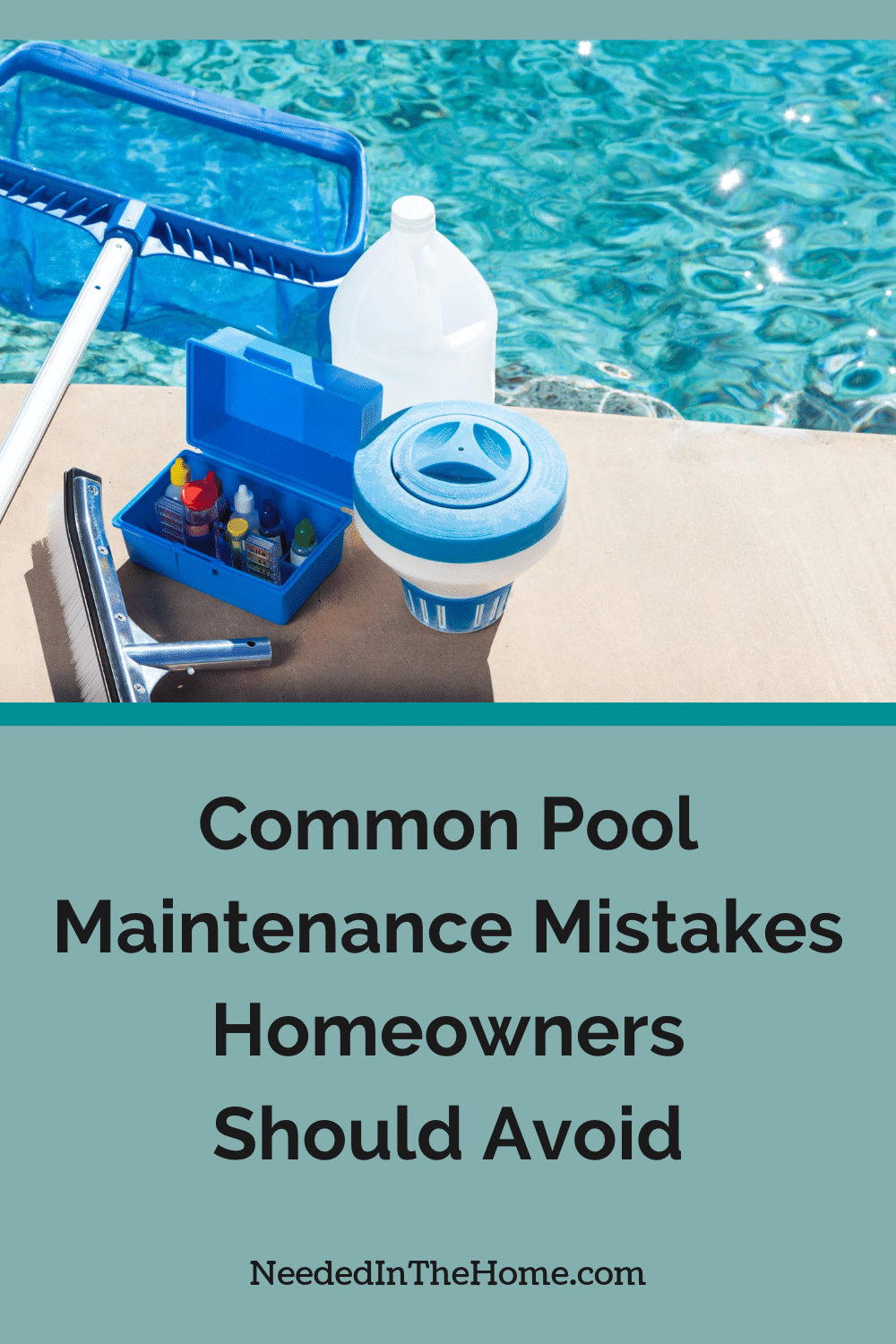
A clean, clear pool depends on regular care and a few basic habits. Small maintenance errors can quickly lead to cloudy water, algae growth or higher energy bills, especially during hot weather and periods of heavy use.
Some links in this post are affiliate links, which means I receive a commission if you make a purchase.
Some mistakes also shorten the life of pumps, filters and pool surfaces. Knowing what to watch for helps you address minor issues before they turn into expensive repairs.
Guessing at The Water Chemistry
Water can look clear while its chemical levels are out of balance. Testing only when the water changes color leaves plenty of time for scale, corrosion or eye irritation to develop. Follow reliable pool water chemistry guidance and test the water at least once a week. You may need more frequent checks after heavy rain, very hot days or a busy weekend.
Measure the pH, sanitizer level and total alkalinity with a quality test kit. Add one treatment at a time, follow the product directions and let the water circulate before testing again. Pouring in extra chemicals to get faster results may create a new imbalance.
Waiting Until The Pool Looks Dirty
Leaves, pollen and fine debris begin affecting water quality before the pool appears neglected. Skim the surface regularly, empty the baskets and brush areas with weak circulation, including steps and corners. A robotic or automatic cleaner can help with the floor, but it won’t replace brushing and water testing.
If your schedule makes routine care difficult, professional pool cleaning can cover chemical balancing, filter care and equipment checks. Professional support may also be useful after a storm, during a green-water problem or when recurring cloudiness doesn’t improve after normal treatment. Addressing the cause usually costs less than repeatedly buying products and hoping one works.
Neglecting The Filter and Pump
The filter collects contaminants that are too small for a skimmer to catch, so a clogged unit places extra strain on the circulation system. Check the pressure gauge when the filter is clean and use that reading as your baseline. A noticeable pressure increase often signals that cleaning or backwashing is due.
Basic pool pump care also includes keeping the pump basket clear and checking that water flows steadily through the system. Never run the pump dry. If it becomes noisy, loses prime or sends bubbles through the return jets, switch it off and investigate. These symptoms may point to a blocked line, low water level or air leak.
Running Equipment on Autopilot
Timers are useful, but one schedule won’t suit every season. Warm water, storms and frequent swimming generally create a greater demand for filtration. Cooler periods may require less runtime, though the water still needs regular circulation. Review the schedule when conditions change instead of leaving the same settings in place all year.
Pay attention to the flow from the return jets. Weak circulation can leave dead spots where algae forms, even if the pump runs for hours. Aim the jets to move water around the whole pool and keep the water level near the midpoint of the skimmer opening. A low level may pull air into the system, while an overly high level can reduce skimming performance.
Ignoring Small Warning Signs
A faint stain, slow leak or flickering control panel can seem harmless at first. Pool problems rarely correct themselves, and water loss can damage nearby soil or increase chemical use. Mark the water level and check it again after 24 hours, accounting for normal evaporation. Persistent drops deserve professional attention.
Inspect visible seals, hoses, lids and fittings every few weeks. Look for damp ground near equipment, cracked plastic or mineral deposits around connections. Don’t force stiff valves or attempt electrical repairs without the proper training. Early service may involve a simple seal or fitting, while delayed repairs can lead to pump damage and larger water bills.
Keep Maintenance Records
A basic log makes pool care easier because it shows what changed and when. Record test results, treatments, filter pressure, cleaning dates and unusual equipment behavior. If the water turns cloudy after a storm, you can compare the latest readings with previous results instead of starting from scratch.
Keep product instructions and equipment model numbers with the log so they’re easy to find. Over time, you’ll learn how your pool responds to heat, rainfall and heavier use. That pattern helps you spot unusual readings sooner. The most useful maintenance habit is consistency: choose a regular testing day, note the results and deal with small changes before the next swim.
This is a contributed post.
More From NeededInTheHome
Product Reviews
Get Our Books
Etsy Shop
TPT Store
eBay Store
Linktree
My Faith Testimony
Subscribe so you never miss a post.
If you find my tips useful, feel free to buy me a coffee. Thank you in advance!
Want to remember this? Pin it to your favorite Pinterest Board!
Join the newsletter
Subscribe to receive our latest articles and promotional content by email from NeededInTheHome
Leave a Reply